
Why Children Find the iPad More Interesting Than Their Parents
Share
“Wait, I Can’t Right Now”: Why the Screen Has Taken Priority Again
You ask your child to build something with construction blocks, bake biscuits or simply sit with you for a while. The answer is: “Wait, I can’t right now.” Yet from the outside, nothing urgent seems to be happening: your child is only watching a video or completing another level on the iPad. In moments like these, it is easy to feel hurt, worried or even jealous of an ordinary device.
But preferring a screen rarely means that a child does not need their parents. Nor is it proof of poor parenting. A tablet does not compete with a real person on entirely fair terms: it is always ready, responds instantly, constantly offers something new and almost never asks the child to wait. A parent, by contrast, is human—tired, busy, sometimes distracted and not always able to join a game the moment they are asked.
So it is better to treat the question “Why does my child prefer the tablet to us?” as a clue rather than an accusation. What exactly does the screen provide? Rest, a sense of control, stimulation, security or achievement? Once we understand the need, it becomes easier to rekindle interest in real-life connection without turning the device into a battleground.
An iPad Never Gets Tired or Distracted—but Parents Do
A tablet does not say, “I need to finish work first,” “Let’s do it later,” or “I don’t have the energy today.” It switches on in seconds and delivers an immediate result. Tap it, and there is a sound. Swipe, and the picture changes. Complete a task, and there is a reward. For a child, it is an extremely convenient interaction partner.
Parents live differently. Dinner needs to be made, messages answered, household matters dealt with and energy restored after a working day. Even when an adult is nearby, their attention may be divided among several tasks. Children notice this sooner than we might think: Mum is listening but looking at her phone; Dad is playing but mentally still at work.
This is not a reason to demand endless involvement from yourself. A child does not need a round-the-clock entertainer at home. What matters are short periods of genuine connection, when the adult is truly present. It is far better to say honestly, “I need ten minutes to finish this, and then we’ll play together for twenty minutes,” and keep that promise than to spend two hours merely being in the same room.
Instant Rewards: Why the Brain Chooses the Easier Route
Screens are built around frequent reward signals: rapid changes in bright images, sounds, points, new levels, messages and endless feeds. Dopamine is involved not only in the experience of pleasure but also in anticipating the next interesting event. This is why a child may find it so difficult to stop right now: it feels as if just one more swipe, video or level is bound to bring something especially exciting.
Real-life interaction moves more slowly. You have to invent a game, agree on the rules, wait for your turn, sit through a dull pause and notice how another person is feeling. Sometimes a child is not understood the first time, sometimes the other person disagrees, and sometimes the game simply does not work out. All of this requires self-regulation and patience.
When screen time takes up most of a child’s free day, ordinary activities can temporarily feel too quiet. A book does not begin at its climax, construction blocks do not assemble themselves, and a conversation does not deliver a reward every few seconds. This does not mean that interest in the real world has been lost forever. The brain simply needs time to readjust to a slower pace.
Screens Are Predictable—People Are Not
A tablet generally does what a child expects. The buttons stay in the same places, a familiar game launches the same way, and a favourite video can be watched again. Even losing can often be undone with another attempt. This predictability can be calming, especially after a busy day at kindergarten or school.
People are more complicated. A parent may be tired, a sibling may refuse to play, a friend may change the rules, and a group of children may be too noisy. In real-life interaction, you cannot fully control another person’s response. For a child who finds uncertainty, mistakes or strong emotions difficult, the screen can become a familiar comfort zone.
This is why a sudden demand to “turn it off now and go and socialise” may cause more than simple protest—it can feel like losing a safe space. It is better to give advance notice: “We’re finishing in ten minutes,” and then offer a clear transition, such as a snack, a bath, a short game or a walk. The more predictable the boundaries are, the less energy everyone spends fighting them.
It Is Not Really About the Device—It Is About Your Child’s Needs
Different needs may lie behind long periods spent on an iPad. One child may crave stimulation and novelty. Another may want to feel successful: in a game, they quickly understand what they have done right. A third may need a break from noise and social contact. A fourth may use videos to feel connected to their peers’ interests.
Instead of asking the broad question “Why are you on the tablet again?”, it is more useful to observe when your child is especially drawn to the screen. Straight after school? When they are bored? After a conflict? When the adults are busy? What are they doing there—watching, creating, playing or chatting? The answers can help distinguish ordinary downtime from an attempt to meet an important emotional need.
Not only the amount of time but also the content of a child’s digital experience deserves attention. Even a profile labelled “for children” does not remove the need for adult involvement. Understanding the hidden risks of the digital world for children can help families discuss rules calmly and specifically instead of relying on bans alone.
If a child is constantly on a phone or tablet, it is a signal not only to review time limits but also to look at the overall rhythm of their life. Are they getting enough sleep, movement, unstructured play, social contact, calm and personal attention? Sometimes the screen causes difficulties; at other times, it is simply the most visible symptom of overload or loneliness.
How to Engage Your Child Away from the Tablet—Without Competing with the Screen
Trying to become “more interesting than an iPad” is exhausting from the outset. Adults may feel they have to put on a show every minute. In reality, what matters to a child is not maximum stimulation but a shared experience: having their idea noticed, their joke answered and their surprise shared, and creating something together.
Start by Joining In, Not by Imposing a Ban
First, show interest in what your child is doing: “Show me what you’re building,” “How does this level work?”, or “Who is your favourite character?” A few minutes of genuine attention can ease the tension. It then becomes easier to build a bridge offline: draw a map of the game world, recreate it with cushions or act out the story with figures.
Suggest One Specific Activity
“Put the tablet away and find something to do” sounds like losing something enjoyable with nothing to replace it. A specific invitation works better: “Let’s race paper aeroplanes,” “Let’s choose three funny challenges for each other,” or “Let’s hide some treasure and draw a map.” It is easier for a child to move towards a clear activity than into an empty space.
Build on Your Child’s Interests, Not Just Your Own Plan
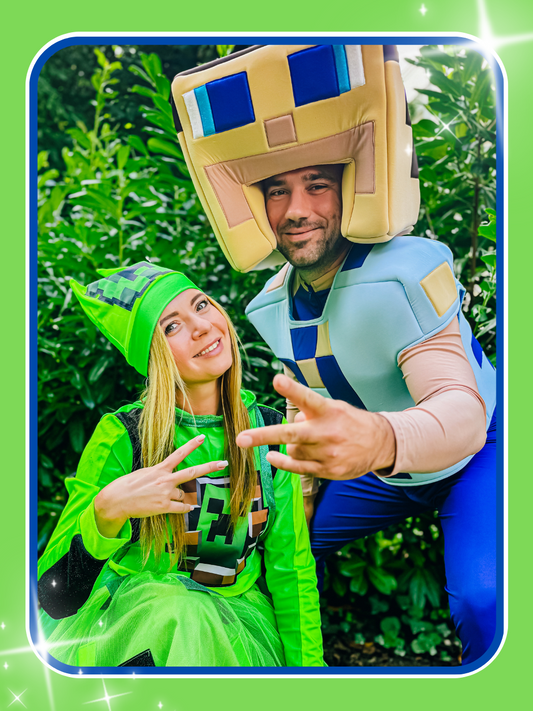
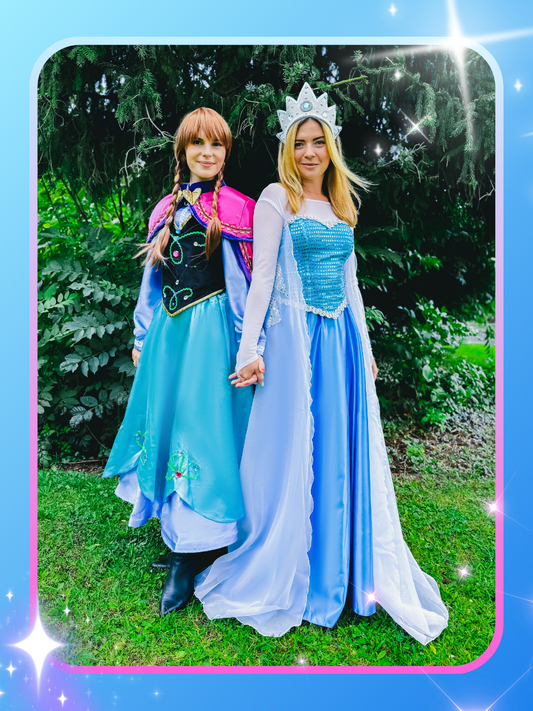
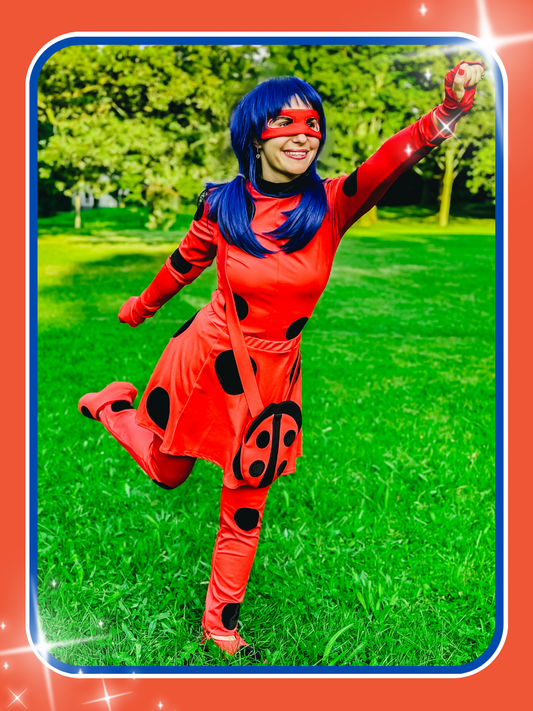
If your child loves Minecraft, suggest building a fortress from boxes or completing a home quest inspired by a pixel world. If they like superheroes, devise an agility-training course. If princesses fascinate them, prepare for a ball with a dancing challenge. There is no need to ban a digital storyline when you can turn it into real-life play.
- Offer a choice between two offline activities instead of an endless list.
- Start with short games lasting 10–20 minutes.
- Add movement, humour, mystery or a small challenge.
- Finish on a high note, so your child wants to do it again.
The Quality of Time Matters More Than the Quantity
Real connection with children cannot be measured only by the number of hours spent in the same room. Twenty minutes of undivided attention is often worth more than a long evening in which everyone is looking at a separate screen. Undivided attention does not mean following a perfect game plan. It means putting the phone away, making eye contact, responding to what your child says and being willing to follow their idea for at least part of the time.
Families can create small rituals: a ten-minute chat before bed, breakfast together without phones, a board game on Friday or a Sunday walk on which the child chooses the route. Rituals remove the need to win back everyone’s attention from scratch each time. The child knows that time for connection will definitely come.
It also helps to distinguish between spending time together and constantly attending to a child. Parents do not need to entertain their children continuously. Boredom can sometimes be the beginning of creativity when accessible materials and calm support are close at hand. The adult’s role is not to eliminate every pause, but to help the child tolerate it and discover an idea of their own.
Real-Life Games: When the Physical World Wins
The real world offers advantages that even the brightest app cannot: smells, movement, touch, genuine anticipation, another person’s laughter, unexpected turns and the ability to shape a shared story. Games work especially well when children do not simply follow instructions but make decisions of their own.
Ideas include a treasure hunt, relay race, shadow theatre, home disco, den building, balloon games or a team quest. This collection of ideas for real-life games and active play with other children is a useful starting point, with activities adapted to the children’s age, the available space and their personalities.
Not every activity has to be educational. Sometimes the value lies precisely in laughing together and feeling that “we did this as a team”. Children and devices can coexist peacefully when their routine regularly includes real-world experiences that do not feel like punishment for using a screen.
A Party Creates a Moment an iPad Cannot Reproduce
At a party, a child is a participant rather than an observer. A live character addresses them by name, friends respond in real time, and the game changes according to the group’s answers. An emotion cannot be paused and replayed later—but that is precisely why it feels real.
An entertainer inspired by a favourite superhero, fairy-tale heroine or Minecraft can help children immerse themselves in a shared story more quickly. It is not only the costume that matters, but also the ability to hold everyone’s attention, notice quieter participants, change the pace and create excitement in a safe environment. Programmes with live children’s entertainers and memorable party experiences are especially helpful when you want to gently move a group of children away from separate screens and into shared play.
This experience is valuable not as a “cure for tablet use”, but as a reminder that the real world can be exciting too. At a children’s party in Frankfurt am Main, Wiesbaden or Mainz, a child experiences movement, interaction with peers, improvisation and memories in which they were at the heart of the story.
Restore Balance Instead of Simply Banning Screens
An iPad does not win a child’s attention because it is more important or better than their parents. It is simply easier, faster and more predictable. Parents do not need to beat technology at its own game. Their strength lies elsewhere: in warmth, shared stories, genuine reactions, hugs, humour and the ability to see the individual child in front of them.
Start small: set clear boundaries, give advance notice before screen time ends, offer a specific alternative and create a short period of undivided attention. Do not expect instant enthusiasm. Moving from the fast pace of the digital world back to real-life interaction can take time.
If screen use consistently interferes with sleep, eating, schoolwork, movement or relationships, or triggers very intense reactions, it is worth discussing the situation with a paediatrician or child psychologist. Seeking support early is not an admission of parental failure.
For a special day, give your child an experience that cannot be swiped away: a team game, friends’ laughter and a meeting with a favourite character. For an unforgettable children’s party filled with genuine emotion in Frankfurt and the surrounding area, you can book a programme tailored to your child’s age and interests.