
Why Roblox Attracts Children So Strongly, When the Game Becomes a Problem, and How Parents Can Notice Warning Signs in Time
Share
Why does Roblox attract children so powerfully, at what point does the game stop being simple entertainment, and how can parents notice alarming signs in time? We explore the benefits, the risks, and calm, practical steps that help restore balance without harsh bans.
Roblox: A Harmless Game or a Trap Children Get Stuck In?
“Just 10 more minutes” — and once again, your child is back in Roblox. Homework is postponed, moods begin to shift, family conversations revolve more and more around one game, and taking the phone away ends in hurt feelings, arguments, or a real meltdown. For some parents, Roblox is just ordinary digital entertainment with nothing particularly alarming about it. For others, it feels like a worrying world their child is sinking deeper into — and becoming harder and harder to bring back from. So where is the line between a harmless hobby and a problem that can no longer be ignored?
Why Roblox Attracts Children So Strongly
It Is Not One Game but an Entire World
Children do not experience Roblox as a single game but as an endless platform where there is always something new to discover. Today it is a simulator, tomorrow a quest, the next day a role-play story or a funny mode with friends. That feeling of endless choice creates the impression that something exciting is always happening there.
A Sense of Freedom and Control
In Roblox, a child decides who to be, where to go, how to look, and what to play. For a child’s mind, this is deeply appealing: in the virtual world, they feel more freedom than in everyday life, where adults, schedules, and rules usually make most of the decisions.
Communication, Status, and Fear of Being Left Out
For many children, Roblox is also part of their social life. They talk about game modes, characters, achievements, purchases, and funny moments. If all their friends are “into it,” it becomes difficult for a child to stay on the sidelines. That is why the game begins to serve not only as entertainment but also as a social environment.
Rewards, Progress, and Bright Emotions
Fast rewards, leveling up, new skins, and the desire to unlock something else hold a child’s attention very strongly. They quickly get used to a rhythm in which almost every action brings a small reward. Against that background, ordinary life with its slower pace can start to feel less exciting.
How Roblox Can Be Beneficial for a Child
Imagination and Creativity
Not everything in Roblox should be seen only as a threat. Some children truly invent stories, build their own game scenarios, learn to navigate digital worlds, and show creative curiosity about how everything works.
Team Play and a Sense of Belonging
In collaborative modes, a child learns to negotiate, share roles, help others, and act as part of a team. When the platform is used in moderation, it can support communication skills and confidence within a group.
Interest in the Digital World
Sometimes Roblox becomes a child’s first spark of interest in game logic, level creation, visual design, and digital environments in general. For some, it becomes the first step toward a more thoughtful interest in technology.
The problem is not that Roblox itself is “bad.” The problem begins when the interest has no boundaries and gradually starts taking the place of real life.
When a Harmless Game Turns Into a Trap
A Child Loses Track of Time
The most common situation is familiar to almost every family: “I’ll only play for 15 minutes” turns into an hour or two. Stopping becomes difficult even after promises, reminders, and direct agreements.
The Game Starts Replacing Everything Else
First homework suffers, then walks, sleep, hobbies, and even simple family communication. A child chooses the screen more and more often instead of real-life activity because the game feels brighter, faster, and emotionally easier.
Any Restriction Causes an Intense Reaction
If turning the game off leads to tears, anger, protest, and a sense of disaster, it no longer looks like ordinary disappointment. Very often, that reaction shows just how strongly the child’s emotional state is tied to access to the platform.
The Game Becomes a Way to Escape
Sometimes a child turns to Roblox not only for entertainment. They go there to escape boredom, anxiety, loneliness, tension, or the feeling that everyday life lacks excitement. At that point, the issue is no longer only about screen time but also about why that world feels more attractive than the real one.
How Roblox Affects a Child’s Behavior
After long gaming sessions, children often find it harder to switch to calm tasks, tolerate boredom, focus on schoolwork, and stop at the right moment. Irritability, emotional ups and downs, sleep difficulties, and a gradual shift in interests can appear: real life begins to lose out to the anticipation of the next login.
Warning Signs You Should Not Ignore
- Your child plays longer than you agreed.
- They lie about how much time they spend in the game.
- They become irritated when Roblox is unavailable.
- They neglect homework, hobbies, walks, and sleep.
- They talk almost constantly only about the game.
- They frequently ask for money for in-game purchases.
- They lose interest in offline friends.
- They cannot stop on their own without conflict.
What Parents Often Do Wrong
One extreme is a total ban, the other is total indifference. Both usually make the situation worse. Shouting increases resistance, a lack of rules creates chaos, and not understanding what exactly a child is doing in Roblox destroys trust. A child needs more than control — they need a real adult who is willing to understand what exactly keeps pulling them back into the game.
What Parents Can Do
The best solution is not panic but structure. Children need clear rules: when they can play, for how long, and under what conditions. It is helpful to take an interest in the game itself and ask your child what they like about it, who their favorite character is, and who they play with. It is just as important to maintain balance: sleep, walks, sports, real-life communication, and experiences that can genuinely compete with a screen in terms of emotion and engagement.
Helpful Links: How to Replace Screen Time and Keep a Child Engaged
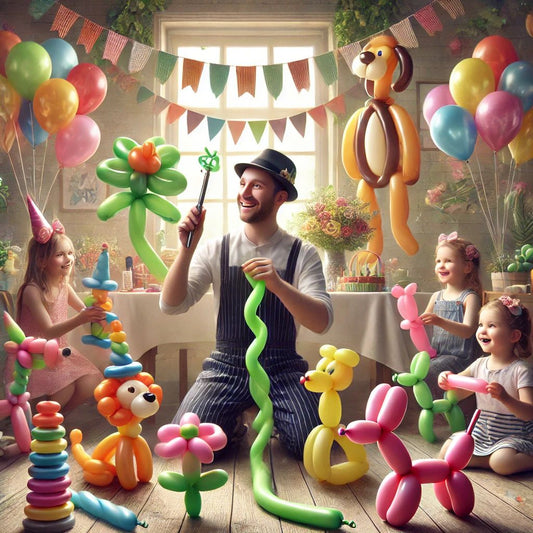
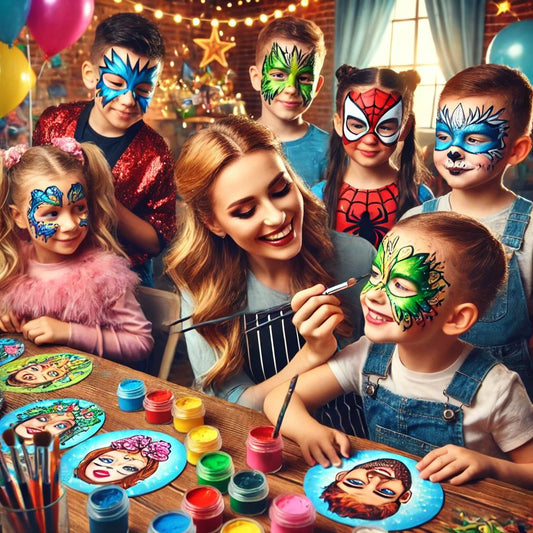
Animators in Germany — a strong internal link for the section about balancing virtual and real life. The themes of live interaction, movement, storytelling, and engagement help show parents that children need not only limits, but also vivid offline experiences.
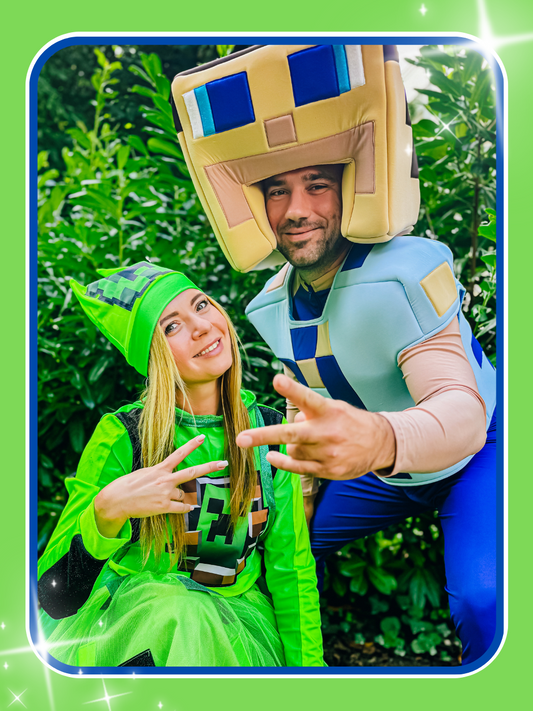
Steve and Creeper Minecraft Animators — the most relevant link for an article about Roblox. It preserves a game-inspired aesthetic that feels familiar to children, while moving it into a real celebration filled with contests, challenges, movement, photos, and live interaction without constant time on a phone.
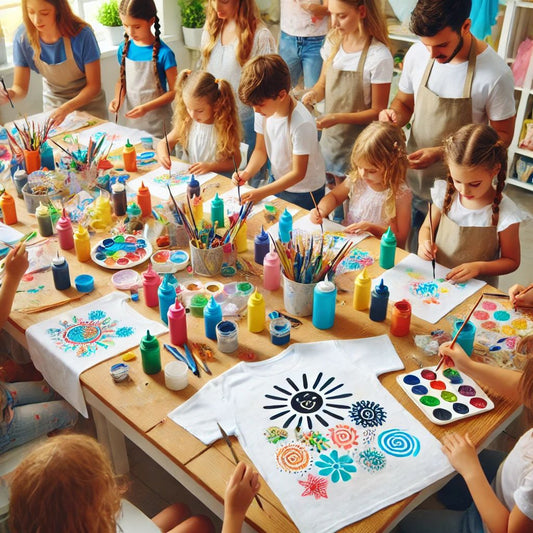
Children’s Workshops — an excellent link for a section about healthy alternatives to screens. Workshops give children what digital overstimulation often takes away: hands-on creativity, human connection, attention to the process, and the joy of a result they can actually hold in their hands.
Roblox: The Enemy or Simply a Tool?
The honest answer is this: Roblox does not make every child addicted, and it is not absolute evil. But it can easily become a space that feels brighter, easier, and emotionally more rewarding than real life. And if adults do not notice why a child keeps choosing that world more and more often, an ordinary game really can turn into a trap.
Conclusion
Roblox is not a monster in itself. What becomes dangerous is a situation in which the game starts replacing rest, communication, movement, sleep, and a child’s interest in the living world around them. That is why parents should not only limit screen time, but also notice the reasons their child is holding on to the screen so tightly. Conversation, structure, involvement, and powerful offline experiences work far better than shouting and sudden bans.